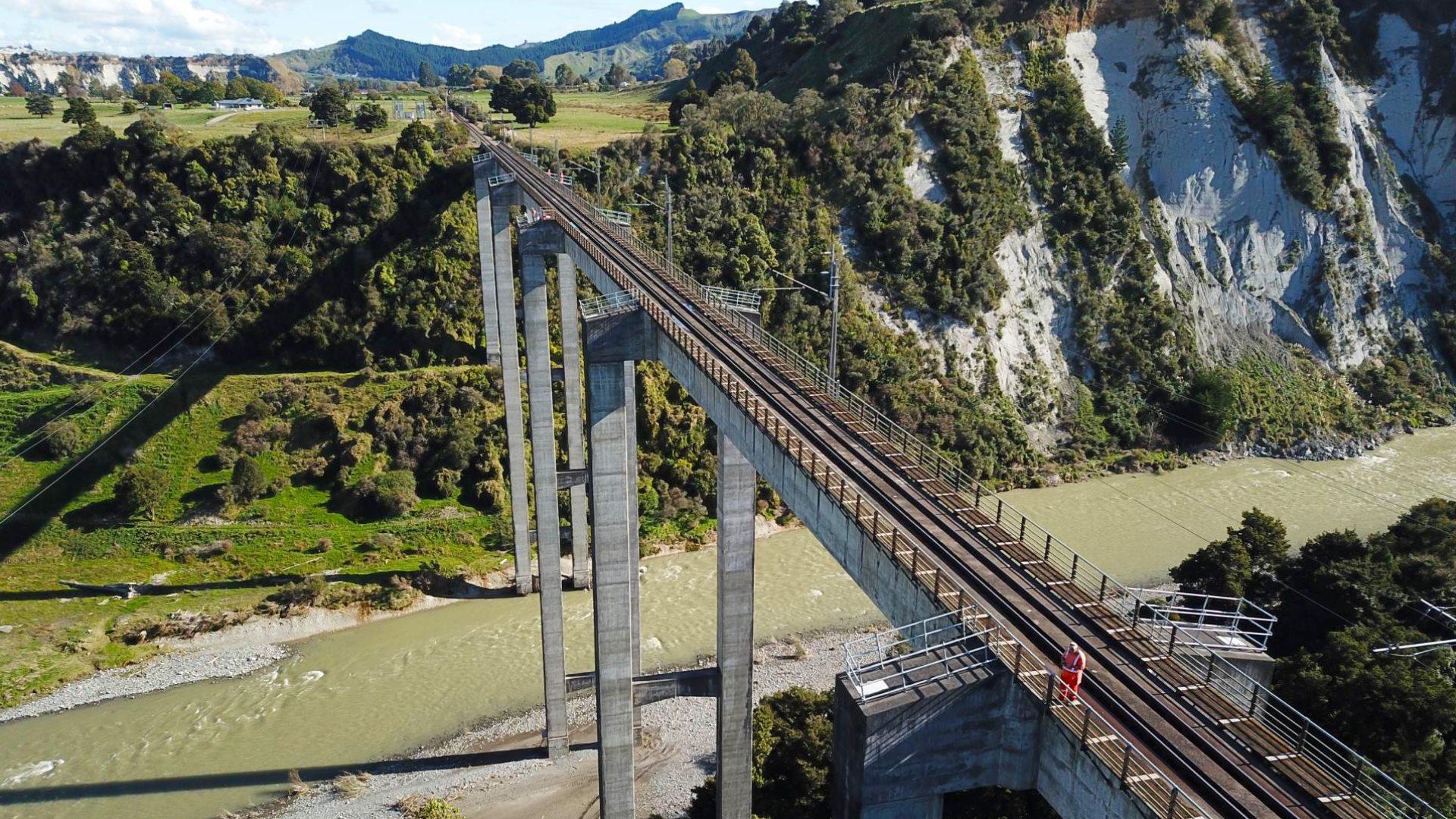
The South Rangitikei Viaduct
First railway viaduct in the world featuring the innovative “base isolation” system
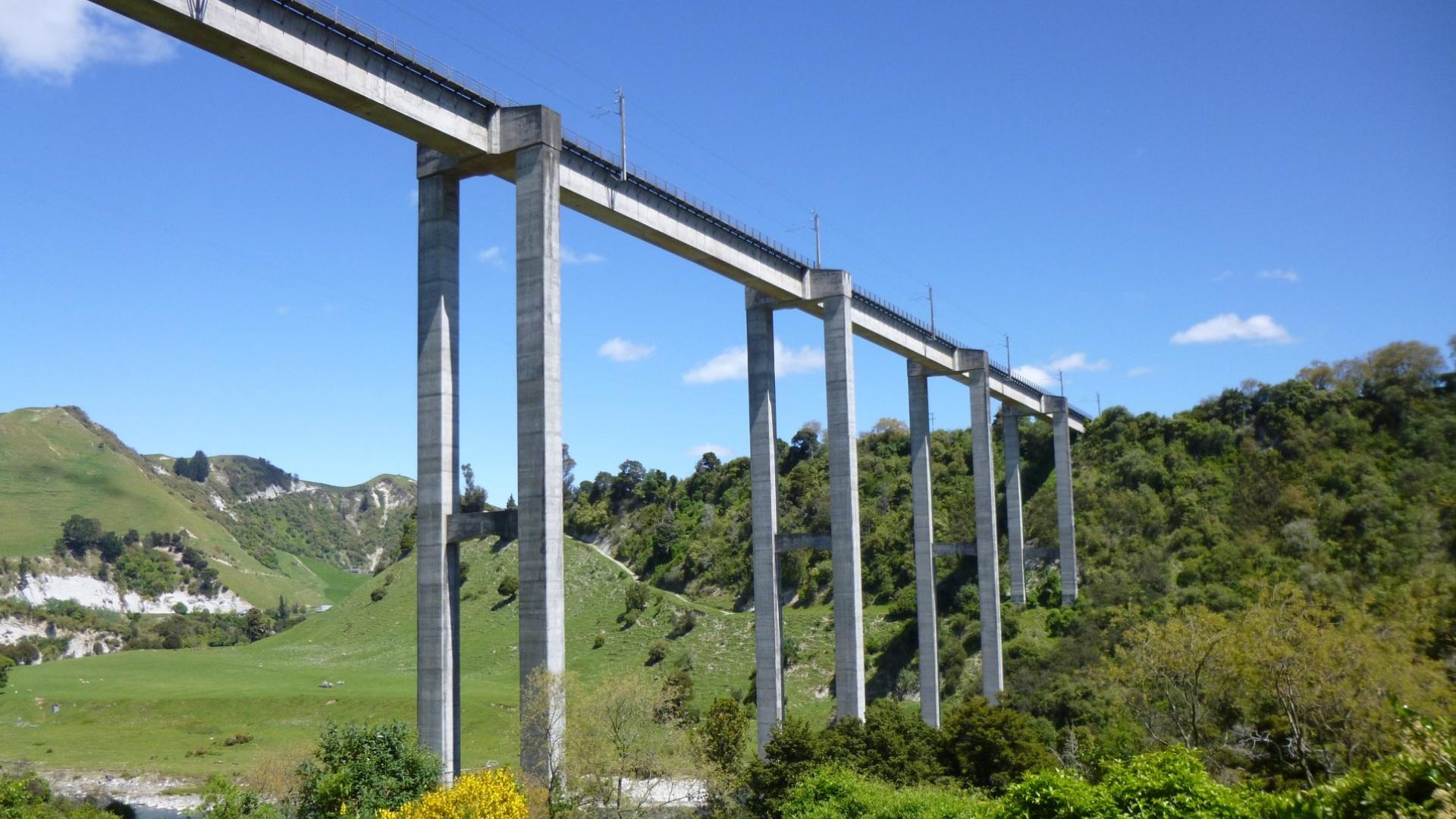
The South Rangitikei Viaduct is not only a structure of cultural heritage significance to New Zealand, but also an example of pioneering engineering, whose innovative feature allows it to resist seismic tremors, a common occurrence on the country’s North Island.
Completed in 1981, it is recognisable for its slender piers, which soar above the Rangitikei, one of the longest rivers on the island.
It is one of the tallest and longest viaducts along the North Island Main Trunk (NIMT), the railway that connects the cities of Auckland and Wellington.
Its structure was the first in the world to have an innovative system called “base isolation” to withstand tremors. This feature has long drawn interest – and admiration – from engineers from around the world.
Contractor: Cogefar-Codelfa, an Italian civil engineering partnership. Cogefar would later become part of the Webuild Group.
Projects's KPI
+ + +
Viaduct’s length
+ + +
Viaduct’s maximum height
+ + +
Main span
The Viaduct's Structure
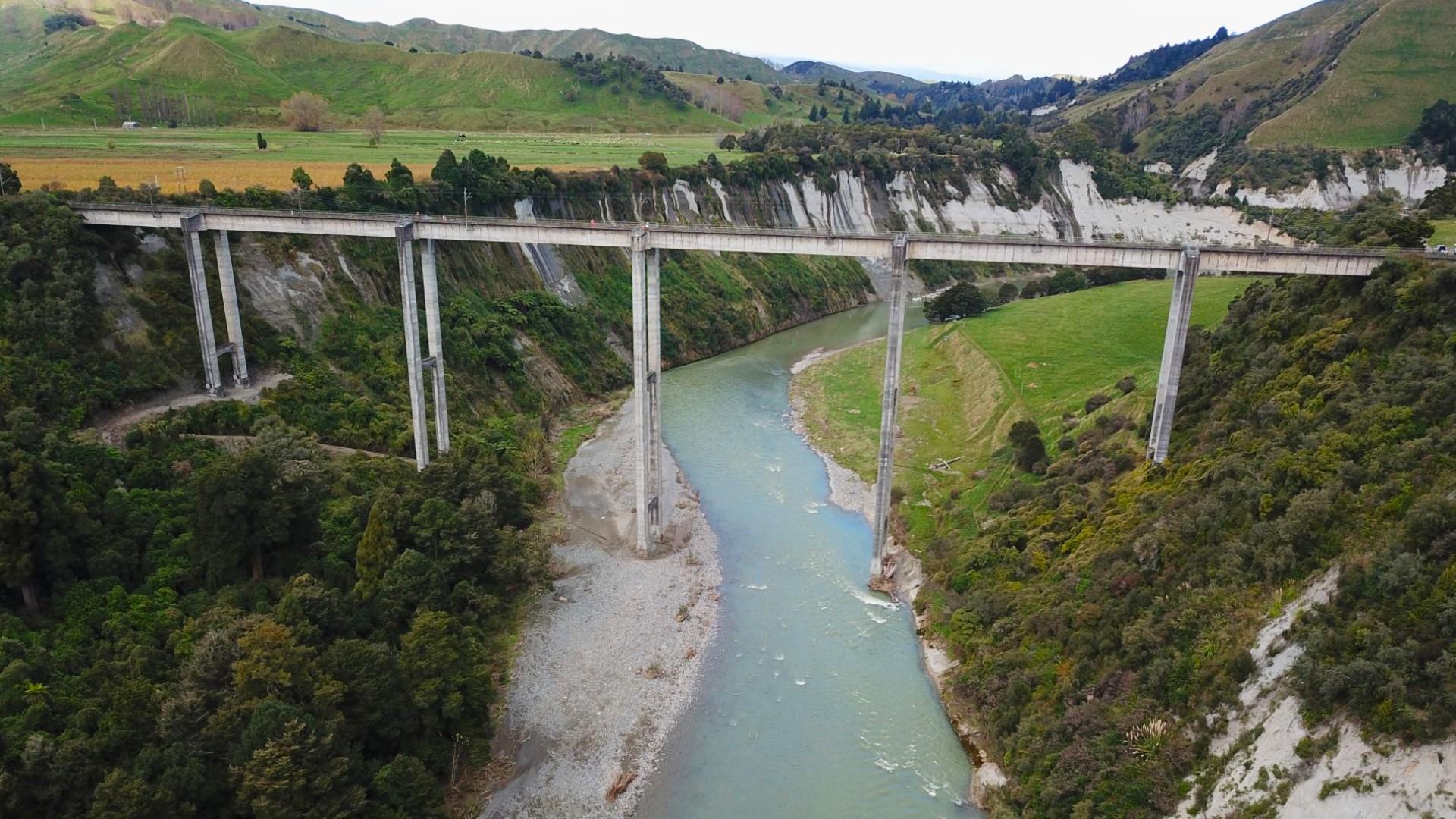
The South Rangitikei Viaduct is 315 metres long, with a deck consisting of six spans, whose varying lengths reach up to 56 metres. The deck rests on seven twin-shafted - or H-shaped - piers which rise 76 metres above the riverbed. The entire structure is made of pre-stressed concrete.
Located two kilometres north of Mangaweka, the viaduct is one of three on the Mangaweka Deviation, a seven-kilometre track that diverts from the NIMT between the towns of Mangaweka and Utiku. The deviation crosses the Rangitikei River twice and the Kawhatau River once.
Built between 1973 and 1981, the deviation was a preventive measure, given how the steep and hilly land between the two towns - through which the NIMT crosses - has always carried the risk of erosion and eventual collapse.
The Innovation of the Base Isolation System
The viaduct’s innovative feature is found at the bottom part of the piers. Developed by Ivan Skinner, a leading New Zealand expert in earthquake engineering, it is known as base – or rocking - isolation.
Each pier has two sections. Between them, there are steel hysteretic dampers that not only carry the weight of the structure but also allow it to move in order to absorb effect of a potential tremor. The dampers transmit the stress caused by the tremor through the piers, allowing them to rock and attenuate the impact.
The South Rangitikei Viaduct, New Zealand
We Build Value Digital Magazine