Tongariro Power Scheme
One of New Zealand’s largest hydropower projects
The Tongariro Power Scheme is one of New Zealand’s largest hydropower projects. Known for the significant engineering challenges that its construction posed and the important role it would eventually play in the country’s economic development, Tongariro is often compared with the Snowy Scheme, a project of similar complexity and relevance in Australia.
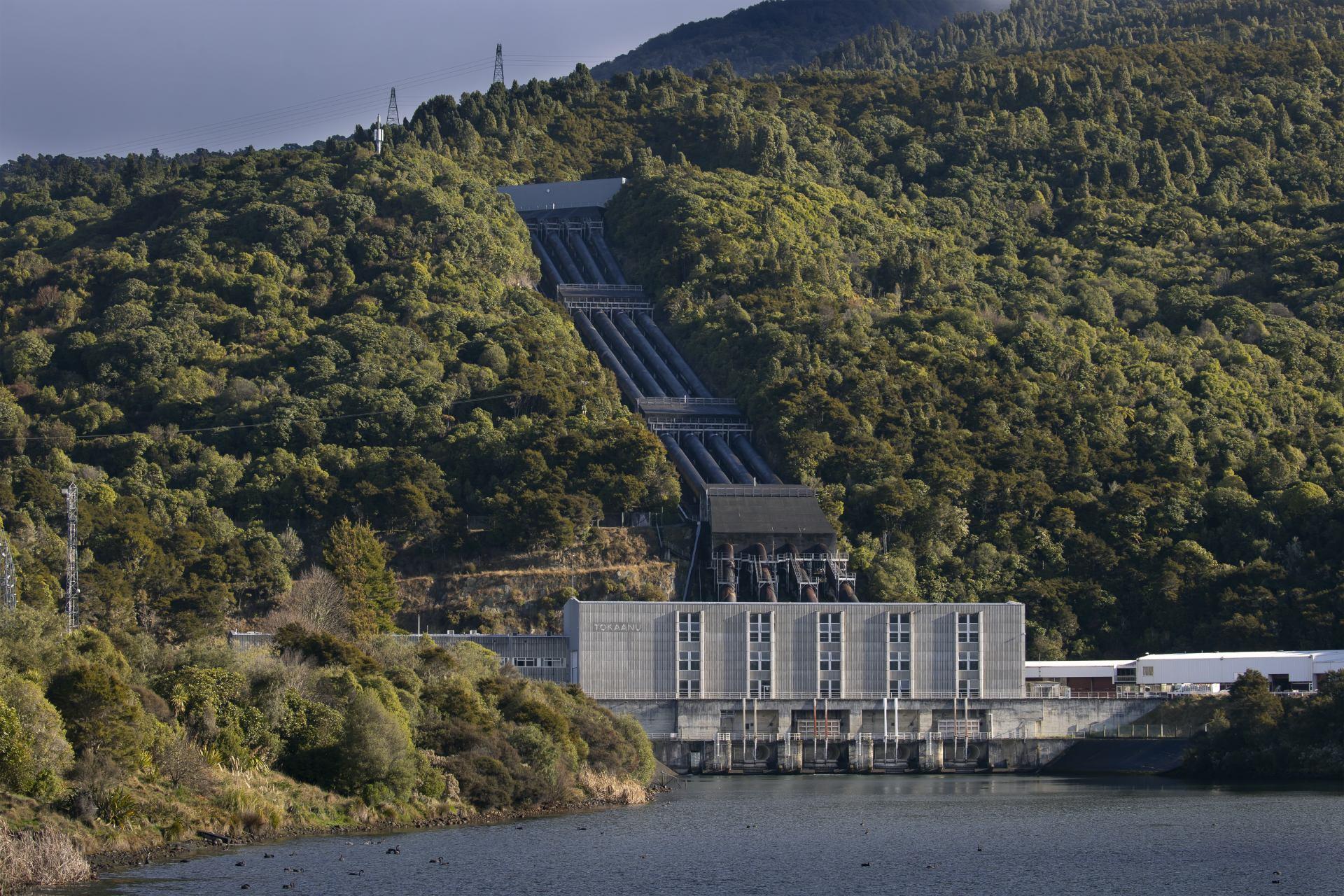
Located on a central plateau near the town of Tūrangi on North Island, it covers a vast area, with three hydropower stations producing a combined total of 361.8 MW of electricity.
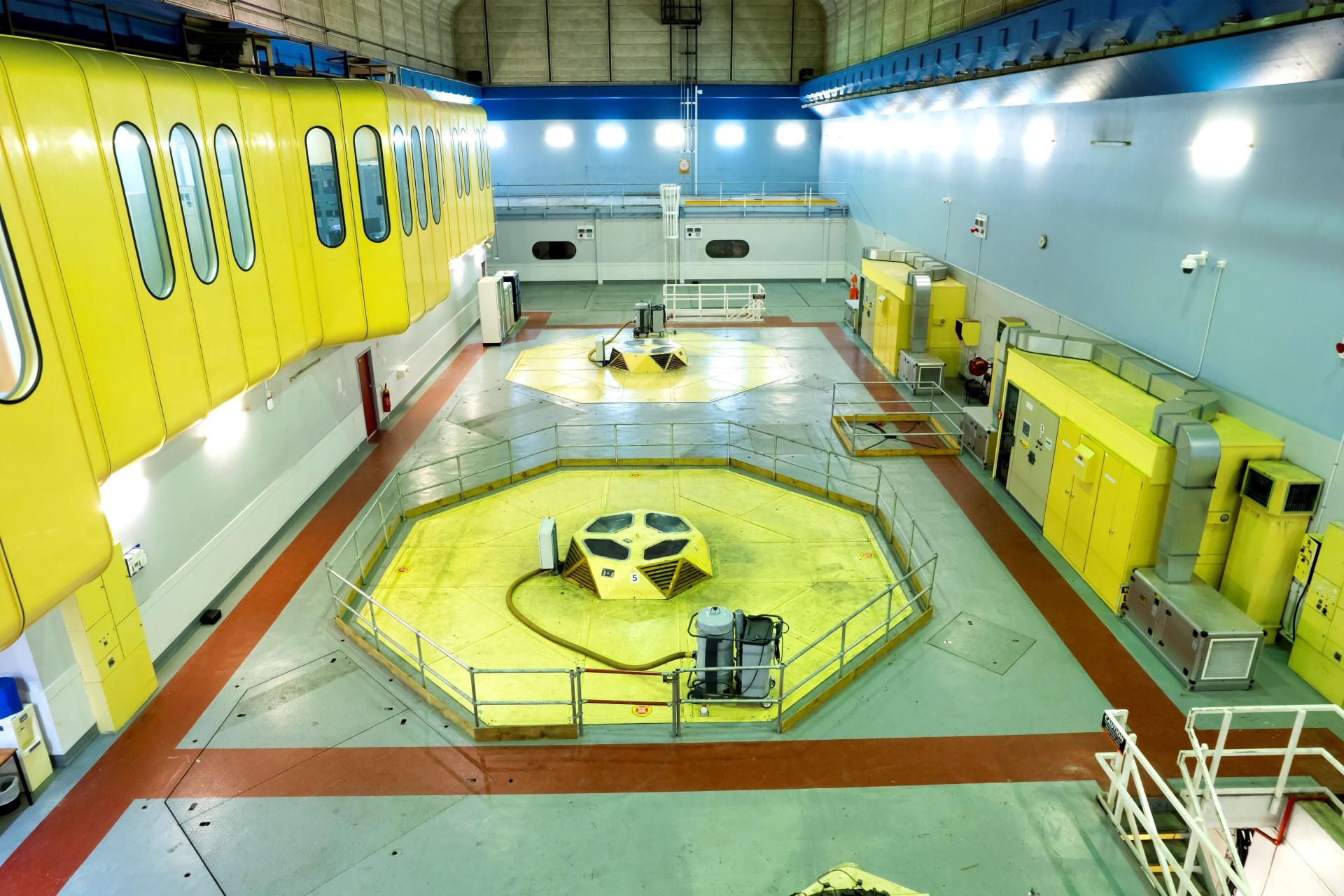
The Scheme draws water from 36 streams and rivers in a shared reservoir covering more than 2,600 square kilometres on either side of a volcanic mountain range. It channels the water through a network of nearly 80 kilometres of artificial lakes, pipes, canals and tunnels to drive the turbines of the three stations: Rangipō (120 MW), Tokaanu (240 MW) and Mangaio (1.8 MW). The water then empties into Lake Taupō.
Commissioned by the local government, Tongariro was built between 1964 and 1983. Italy’s Costruzioni Generali Farsura SpA (Cogefar), a predecessor of Italian civil engineering group Webuild, and partner Costruzioni del Favero SpA (Codelfa) worked on three contracts that contributed to its construction. They excavated more than 40 kilometres of tunnels and passages for the scheme - more than half of the total.
Client: Ministry of Works. Near the turn of the century, the Electricity Corporation of New Zealand, was the last public entity responsible for the scheme before it was dismantled by the government. Genesis Energy, a private utility, has since been operating Tongariro.
Contractor: Codelfa-Cogefar (N.Z.) Ltd
Project Key Facts
+ + +
Total production capacity
+ + +
+ + +
tunnels length excavated (more than half of the planned total)
+ + +
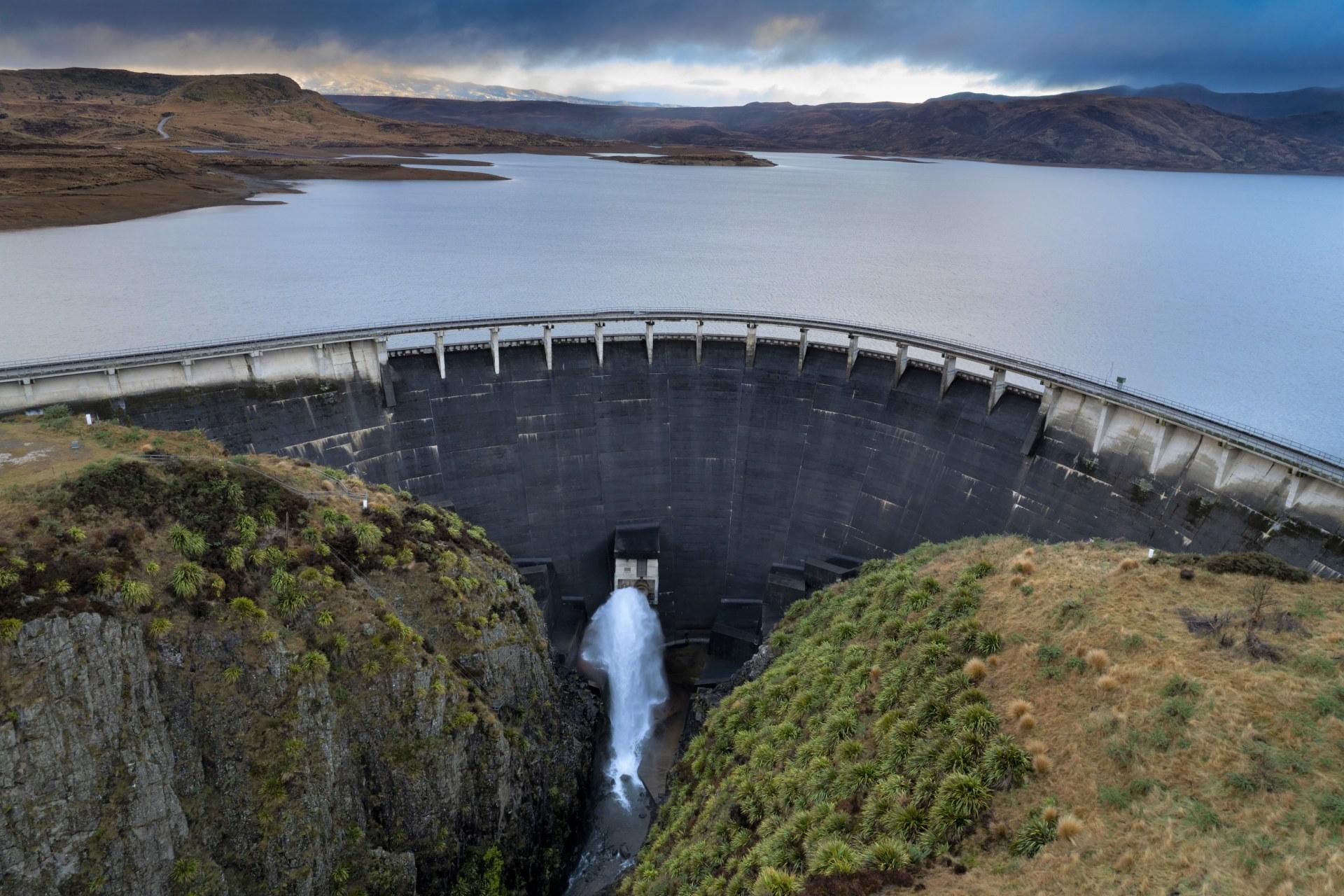
Dams: Moawhango, Rangipo, Poutu, Otamangakau and Te Whaiau
The Moawhango-Tongariro Tunnel: Milestones, Technology and Safety
On the eastern side of the volcanic mountain range - dominated by mounts Ruapehu, Tongariro and Ngauruhoe - is the Moawhango-Tongariro, one of the three tunnels excavated by Codelfa-Cogefar. At slightly more than 19 kilometres, it took the world record for a while as the longest of its kind driven as a single tunnel. Its length had obliged workers to excavate it from both ends and meet in the middle. At the time of its excavation, no lasers, computers or satellite positioning systems were available to guide them – testament of the workers’ expertise.
Work on the Moawhango-Tongariro Tunnel commenced in late August 1969. To this day, it remains one of the longest hydro tunnels in the southern hemisphere at 19.33 kilometres. It has a finished width of 3.35 metres at spring line and a finished height of 3.1 metres on centre line. It brings water from the southern reservoir of the Ruapehu Mountain to a point on the Tongariro River immediately upstream to the Rangipo Headrace Dropshaft. It was designed to contribute a mean of 13.5 cubic metres of water per second to the total mean of 58 cubic metres that flow through the Tokaanu.
The tunnellers encountered unstable volcanic alluvium, many faults and vast quantities of ground water that routinely poured into the tunnels under construction. Rocks would fall from the ceiling. At other times, the ceiling itself would collapse. Such were the conditions that they discarded machine excavation in favour of the more conventional drill and shoot method, using air-driven, pusher-leg rock drills. In one instance, a 250 HP pump was used during a flooding of the tunnel.
Seven years after the start of works, the tunnel was completed - with no fatalities. “It is largely due to their experience and daily application that this tunnel can be remembered also as the one that frustrated the generally applied statistic of one fatality per mile: no lives were lost on the job throughout the duration,” according to a booklet published by Codelfa-Cogefar.
Tongariro Power Scheme: the benefits
The Tongariro Power Scheme was built at a time when New Zealand faced power shortages due to a burgeoning population and economy.
Currently operated by utility Genesis Energy, the scheme is responsible for about four percent of the country’s total electricity generation. It produces an average of 1,300 GWh a year, enough for about 160,000 households.
Tongariro Power Scheme, New Zealand, Webuild Group - Credits: Genesis Energy
We Build Value Digital Magazine